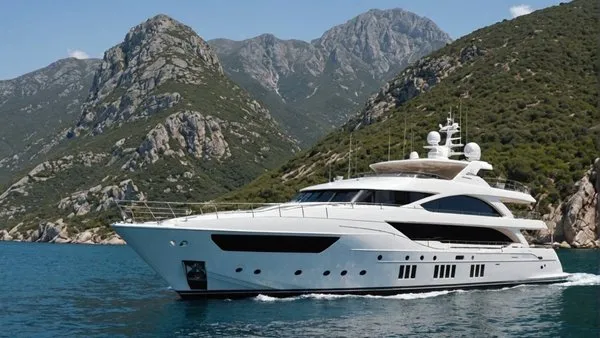
Top Yacht Charter Options: A Definitive Guide for Luxury Travel
The decision to charter a vessel is fundamentally an exercise in risk management and logistical orchestration. Unlike traditional hospitality, where the infrastructure is fixed and localized, a yacht charter represents the mobilization of a complex, self-contained environment. For the uninitiated, the process can appear to be a straightforward transaction of leasing luxury real estate on the water. In reality, it is a sophisticated, multi-party agreement involving maritime law, international tax jurisdictions, and high-stakes operational variables that can shift in an instant due to weather or mechanical factors.
To approach this sector with authority is to recognize that a yacht is not merely a vacation platform; it is an industrial asset managed by a specialized crew and governed by rigid safety protocols. The disconnect between a guest’s expectations and the realities of maritime operations is where most frustration arises. Mastering the nuances of this landscape—from the intricacies of the Advance Provisioning Allowance (APA) to the differences between MYBA and CYBA contract frameworks—is the only way to ensure that the experience aligns with the significant capital investment involved.
This analysis deconstructs the yachting ecosystem into its operational, financial, and strategic components. By shifting the focus from the aesthetic allure of the vessel to the mechanics of the charter itself, we provide a definitive framework for evaluating, planning, and executing a successful voyage that remains resilient to the common pitfalls of the high-end travel market.
Understanding “top yacht charter options”
The pursuit of the top yacht charter options is frequently obscured by marketing noise that prioritizes hull length and interior finishes over operational reliability. A “top” option is not universally defined; rather, it is a function of mission-capability alignment. An opulent 60-meter superyacht might be an exceptional asset for a static corporate event in the harbor, but it would be a catastrophic choice for a guest prioritizing access to shallow, secluded coves in the Exumas.
True expertise in evaluating the top yacht charter options requires an inversion of the common selection process. Instead of asking “what looks best,” the analytical charterer asks “what infrastructure supports the desired outcome?” This includes analyzing the captain’s experience in the specific cruising grounds, the crew’s tenure on the vessel, and the age and frequency of the ship’s maintenance schedule. Oversimplification—such as selecting a vessel based solely on its inclusion in a high-end photography spread—is the primary driver of negative charter outcomes. When you compare private aviation services or high-end yachts, the objective is to assess the resilience of the support network backing the asset. The top yacht charter options are almost always those backed by central agencies with deep, institutional relationships, where the human element—the crew and the shore-side support—can effectively pivot when the inevitable maritime disruption occurs.
Deep Contextual Background
Historically, yachting was a private endeavor for owners who engaged in “bareboat” or crewed operations within closed circles. The institutionalization of the charter market emerged in the latter half of the 20th century, codified by associations such as MYBA (The Worldwide Yachting Association) and CYBA (Charter Yacht Brokers Association). These organizations transformed the market from a “handshake deal” economy to one governed by standardized legal frameworks.
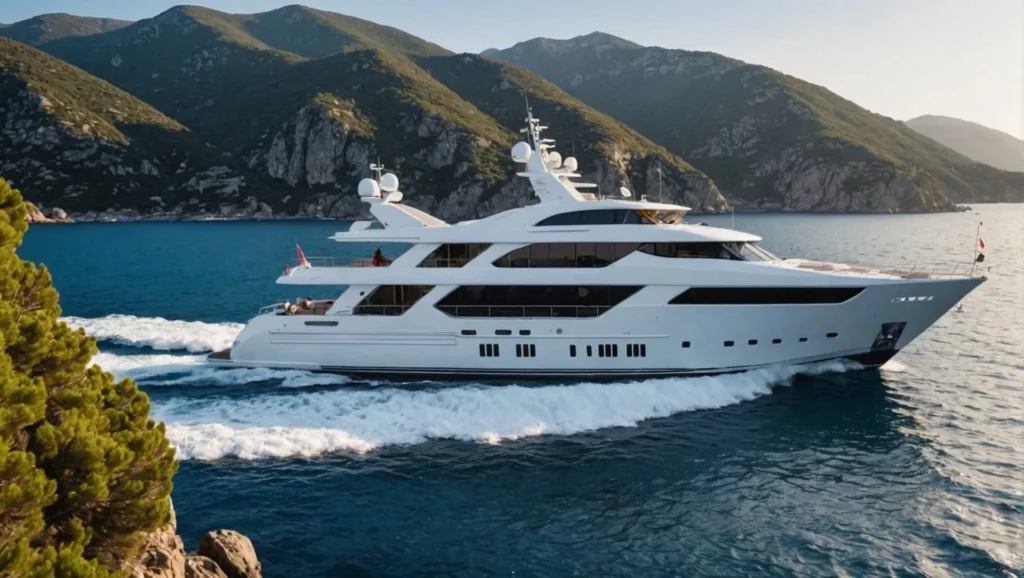
Today’s industry is defined by “vertical integration.” The best vessels are often managed by large, centralized agencies that oversee their own maintenance, crew training, and bunkering operations. This professionalization has created a tiered market: institutional-grade vessels that operate with the predictability of a corporate flight department, and fragmented, independent vessels where the risk profile is significantly higher.
Conceptual Frameworks and Mental Models
-
The Operational-Aesthetic Trade-off: Luxury often hides mechanical complexity. Evaluate the vessel’s utility: a yacht with a high draft will restrict the itinerary, regardless of how “luxurious” the interior might be.
-
The “Recovery-to-Arrival” Ratio: A metric of how quickly a vessel or its management team can recover from a mechanical failure. Does the firm have sister ships in the area? Are they part of a larger fleet?
-
The Total Economic Impact (TEI) Model: Do not evaluate the charter fee in isolation. Consider the aggregate cost, including fuel, dockage, local taxes, and the obligatory (though discretionary) crew gratuity, which typically ranges from 15% to 25% of the base fee.
Key Categories and Variations
| Category | Typical Asset | Best Mission Profile | Primary Risk |
| Superyacht (80ft+) | Motor Yacht | High-service, remote/long-range | High fuel/dockage volatility |
| Catamaran | Multihull | Shallow water, stability, space | Limited speed/range |
| Performance Sail | Monohull Sail | Nautical enthusiasts/sport | Physical labor/skill required |
| Expedition Vessel | Ice-classed steel | High-latitude, remote exploration | Mechanical complexity |
Realistic Decision Logic: When you compare private aviation services or yachting options, define your “constraint set.” If your group has mobility issues, the verticality of a monohull sailing yacht is a dealbreaker; a wide-beam catamaran is the logical choice. If your group demands high-speed travel between islands, a motor yacht is mandatory.
Detailed Real-World Scenarios
1. The Dynamic Weather Shift
-
Constraint: A sudden squall forces a change in the itinerary.
-
Decision Point: Does the captain prioritize the original itinerary (risking guest comfort) or pivot to a sheltered anchor (sacrificing the initial plan)?
-
Second-Order Effect: Guests often feel disappointed by missed destinations unless the agency has managed expectations regarding “flexible cruising.”
2. The Multi-Generational Group
-
Constraint: Diverse age ranges with conflicting needs (leisure vs. activity).
-
Decision Point: Selecting a vessel with a “beach club” or varied water-toy selection to allow independent activity.
-
Failure Mode: Misaligning crew-to-guest ratios; a small crew cannot manage a high-intensity activity schedule while maintaining service standards.
Planning, Cost, and Resource Dynamics
The “all-inclusive” versus “plus-expenses” (MYBA) model is the most misunderstood aspect of yachting economics.
| Cost Element | Inclusion Status | Impact on Budget |
| Base Charter Fee | Mandatory | Primary budget driver |
| APA (Provisioning) | Variable (25–35%) | Fuel, food, docking; reconciled post-trip |
| VAT/Taxes | Varies by country | Can add 10–22% depending on region |
| Gratuity | Discretionary (15–25%) | Socially mandatory; budget separately |
Tools, Strategies, and Support Systems
-
The Preference Sheet: This is the most critical tool for customizing the service. Be exhaustive.
-
The Broker Liaison: Utilize a broker who belongs to professional associations (CYBA/MYBA) to ensure they have the leverage to hold the vessel owner accountable.
-
Safety Audits: Verify that the vessel is ISM (International Safety Management) compliant, which dictates strict operational and safety protocols.
Risk Landscape and Failure Modes
The maritime environment is unforgiving. Compounding risks occur when poor weather is met with a lack of “Plan B” logistics. A vessel that lacks high-speed satellite connectivity is a failure in today’s environment for those needing to remain tethered to the world. Furthermore, the “technical” breakdown (AOG equivalent in aviation) is the greatest risk; verify the vessel’s recent maintenance history before finalizing the contract.
Governance, Maintenance, and Long-Term Adaptation
Treat your charter documentation as a living log. After each voyage, perform a formal debrief: What worked? Where were the service gaps? Was the provisioning excessive? This feedback loop ensures that the top yacht charter options remain aligned with your evolving needs over time.
Measurement, Tracking, and Evaluation
-
Leading Indicators: The responsiveness and transparency of the crew during the pre-charter “preference” phase.
-
Lagging Indicators: The final reconciliation of the APA. A professional captain will provide daily or weekly transparent accounting of all expenditures.
Common Misconceptions and Oversimplifications
-
Myth: “You can go anywhere, any time.” Correction: Geography and seasonal weather patterns are non-negotiable constraints.
-
Myth: “The charter fee is the total cost.” Correction: Expect 30–50% in additional expenses.
-
Myth: “The crew is there to serve.” Correction: The crew is there to ensure safe operation; service is secondary to the vessel’s integrity and safety management.
Conclusion
The top yacht charter options are those that offer a synthesis of mechanical integrity, crew excellence, and transparent contractual terms. Navigating this market is not about finding the perfect boat, but about building a relationship with the professionals—brokers and captains—who manage the inherent volatility of the sea. By focusing on the structural and logistical foundations of the charter, you move from a passive consumer to an informed participant, ensuring the voyage is as seamless as it is spectacular.