How to Manage Flight Cancellations: An Expert’s Strategic Guide
The modern aviation network is a fragile, hyper-optimized system. When a single node—a hub airport, a localized weather event, or a systemic software failure—experiences a breakdown, the resulting cascades can compromise thousands of individual itineraries simultaneously. For the traveler, this phenomenon is often experienced as a sudden, arbitrary cessation of service. However, viewing a cancellation through the lens of a personal misfortune is a strategic error. It is more accurately understood as a collapse of a complex logistical chain, requiring a sophisticated, methodical response to navigate the fallout.
Effective resolution in these moments requires a departure from the reactive, emotional responses encouraged by standard customer service channels. When a flight is cancelled, the bottleneck is not necessarily the airline’s inability to assist, but the sudden, exponential increase in demand for its limited human and technological resources. The capacity to secure a seat on an alternate flight depends on one’s ability to bypass this bottleneck, leveraging data, institutional protocols, and a clear understanding of the regulatory landscape governing air transport.
This examination moves beyond standard travel advice to provide a structural understanding of how to manage flight cancellations. It explores the operational realities of airline scheduling, the hierarchy of passenger rights, and the mental models necessary to maintain control when the primary plan ceases to exist. By adopting a proactive stance—treating travel as a managed operation rather than a fixed itinerary—the frequency and severity of disruption can be substantially mitigated.
Understanding “how to manage flight cancellations”
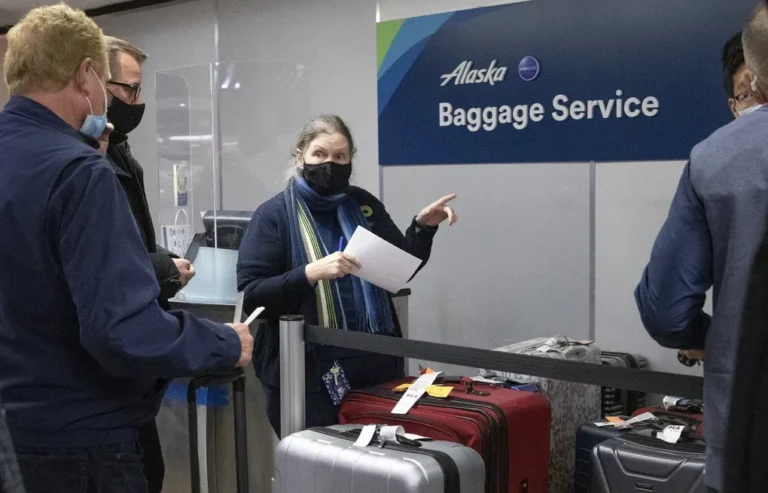
The challenge of how to manage flight cancellations is rooted in the information asymmetry between the carrier and the passenger. When a disruption occurs, the airline often has access to real-time data regarding flight load, crew availability, and interline agreements, while the passenger is left with the static, often delayed information provided by a departure board or a generic mobile notification. The primary misunderstanding is the belief that waiting in a physical queue is the most effective way to resolve the situation. In reality, the physical line is often the most inefficient point of resolution, as it congregates those seeking the same limited resource at the same time.
True mastery involves offloading the resolution process to digital tools or high-priority telephone lines, effectively moving the passenger to the front of the virtual queue. Furthermore, understanding the difference between “controllable” cancellations (e.g., maintenance, crew shortages) and “force majeure” events (e.g., weather, air traffic control strikes) is essential for managing expectations and asserting rights to compensation or alternate routing.
Deep Contextual Background
Historically, the aviation industry operated under a much more localized, human-led management structure. When a flight was cancelled, a station manager had the authority to issue manual tickets and authorize hotel expenses on the spot. As the industry consolidated into global alliances and adopted automated, hub-and-spoke models, the decision-making process was offloaded to complex, algorithmic scheduling systems. While this increased efficiency for the masses, it significantly decreased the individual traveler’s ability to interact with a human capable of exercising discretion.
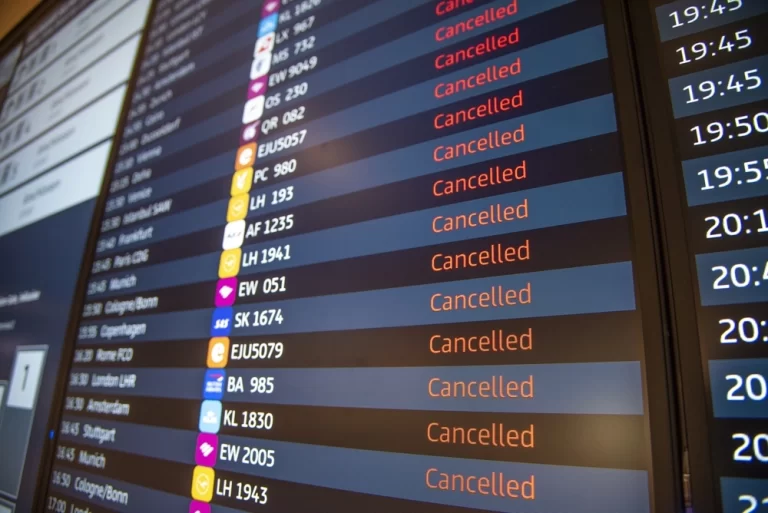
The current system is characterized by “lean operations.” Airlines maintain minimal buffers in crew and equipment to maximize profitability. Consequently, the industry possesses very little inherent resilience to shocks. This systemic vulnerability is the reason why disruptions are becoming more complex to manage—a single cancelled flight in a major hub can have ripple effects across multiple days and dozens of cities, as the domino effect of crew scheduling and equipment repositioning unfolds.
Conceptual Frameworks and Mental Models
-
The Parallel Processing Model: Never rely on a single channel for resolution. While waiting in a physical line, simultaneously engage the airline’s mobile application, the telephone customer support line, and if applicable, a travel management company or credit card concierge.
-
The Hub-Avoidance Strategy: Recognize that disruptions are disproportionately concentrated in major airline hubs. A flight through a secondary city is often safer, not because it is less prone to cancellation, but because it is less prone to the cascading failure of a major hub.
-
The Regulatory Hierarchy Model: Categorize the cancellation by jurisdiction. European (EU261) and North American regulations differ significantly in their requirements for duty of care and financial compensation. Knowing your rights is a critical leverage point in negotiation.
Key Categories and Variations
| Category | Typical Cause | Resolution Path | Financial Liability |
| Technical/Mechanical | Equipment failure | Carrier-directed rebooking | Full compensation/Duty of care |
| Crew-Related | Scheduling mismanagement | Carrier-directed rebooking | Full compensation/Duty of care |
| Force Majeure | Severe weather, natural disaster | Self-managed/Carrier-assisted | Limited (Duty of care only) |
| External/ATC | Strikes, airport closure | Interline rebooking/Self-managed | Varies by jurisdiction |
Decision Logic: If a flight is cancelled due to a carrier-controlled issue, the burden of resolution lies with the airline. If the issue is force majeure, the airline is often limited in its obligations, and the burden shifts to the traveler to manage their own contingency planning.
Detailed Real-World Scenarios
-
The Hub Collapse: A major thunderstorm hits a hub airport. Thousands of flights are grounded. The strategy is to immediately look for routes through alternative airports or different carriers that are not part of the same alliance, paying out-of-pocket if necessary, as the airline’s official rebooking engine is likely overloaded.
-
The International Connection: A short-haul flight cancels, threatening a long-haul connection. The priority is to bypass the short-haul segment entirely, using high-speed rail or ground transport if available, to reach the next hub, effectively “re-syncing” with the itinerary at a more stable node.
-
The Mid-Route Stranding: A flight cancels in a city that is not the final destination or the original point of departure. The requirement here is for lodging and sustenance. Knowing the airline’s specific contract of carriage—specifically regarding “duty of care”—is critical to ensuring these costs are covered by the carrier.
Planning, Cost, and Resource Dynamics
The cost of disruption is often measured in time rather than money, yet the ability to mitigate that time-cost often requires an upfront investment.
| Cost Component | Nature of Expense | Variability |
| Direct Rebooking Cost | Out-of-pocket for new ticket | High |
| Indirect Logistical Cost | Hotels, meals, ground transport | Moderate |
| Opportunity Cost | Lost meetings, events, transit time | High |
Tools, Strategies, and Support Systems
-
Global Distribution System (GDS) Access: Utilizing tools that show actual seat availability, not just what the airline’s website displays, is a significant advantage.
-
Interline Agreements: Understanding which airlines have agreements to carry each other’s passengers. This is the “hidden” path to rebooking when an airline’s own flights are full.
-
Credit Card Travel Insurance: Many premium cards provide robust cancellation protection that serves as a vital financial backstop when carrier-provided compensation is unavailable.
Risk Landscape and Failure Modes
The failure mode of most travelers is “passivity.” The assumption that the airline will automatically provide the “best” alternative is frequently incorrect. The carrier’s system prioritizes its own operational costs, not the passenger’s schedule.
Governance, Maintenance, and Long-Term Adaptation
To effectively manage future disruptions, treat each travel event as a data-collection exercise.
-
Post-Trip Debrief: For every major travel quarter, review any cancellations. Were the delays caused by systemic issues (the airline, the airport) or preventable issues (tight connection windows)?
-
Layered Checklist: Maintain a pre-departure plan that includes pre-loaded contacts for your travel advisor, credit card insurance provider, and local transit alternatives.
Measurement, Tracking, and Evaluation
-
Leading Indicators: Flight on-time performance (OTP) for the specific route and time of day, historical hub congestion data.
-
Lagging Indicators: Time-to-resolution during a disruption, total out-of-pocket costs incurred, percentage of “at-risk” connections that were successfully completed.
-
Documentation: Always save receipts for all ancillary costs (meals, transport, lodging) incurred during a disruption. Airlines rarely provide proactive refunds; these are almost always reimbursement-based.
Common Misconceptions and Oversimplifications
-
“The agent at the counter can do anything.” Often, they are bound by the same broken system as the website. Their power is often overstated.
-
“I must wait for the airline to call me.” In a system-wide meltdown, the airline may never call. Proactivity is the only path to resolution.
-
“Compensation is guaranteed.” Compensation is usually regulatory, not contractual, and applies only to specific scenarios.
Conclusion
Mastering how to manage flight cancellations is a process of transitioning from a passive passenger to an active logistical operator. It requires a willingness to challenge the default responses provided by airline systems, an understanding of the regulatory landscape, and the foresight to maintain multiple avenues for resolution. By acknowledging that the aviation system is inherently prone to failure, one can build a strategy that accommodates for, rather than reacts to, the inevitable disruptions of global travel. Adaptability remains the most significant asset in the traveler’s toolkit.