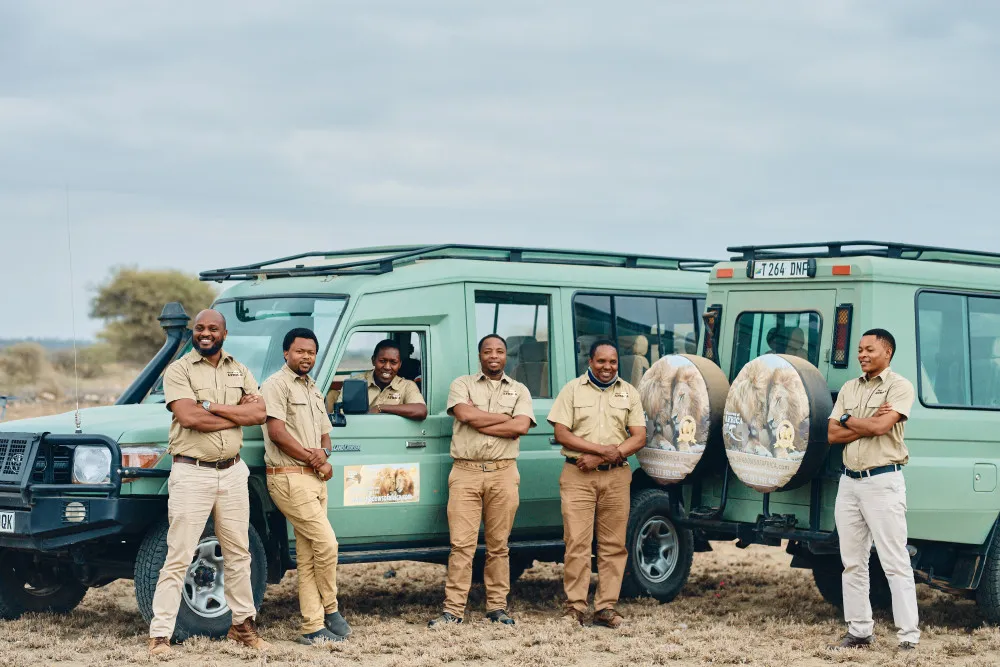
Top Safari Tour Operators: How to Choose for Elite Expedition Quality
The safari experience is frequently mischaracterized as a static product—a collection of hotel bookings and park entries. In reality, it is a highly volatile logistical operation occurring in remote, ecologically sensitive, and infrastructure-poor environments. When one engages with the wilderness, the standard service-industry safeguards—such as reliable cellular networks, rapid emergency medical response, and redundant transportation options—are often absent. Consequently, the quality of one’s experience and the margin of one’s safety are entirely dependent on the structural competence of the organization managing the journey.
Selecting the top safari tour operators is not merely a task of price comparison or review aggregation. It is an exercise in institutional due diligence. A high-performing operator serves as an extension of the traveler’s own agency, absorbing the immense complexity of coordinating light aircraft, specialized ground transport, bush-based lodging, and expert field guidance into a seamless, singular movement. Failure to appreciate this structural dependency often results in itineraries that are brittle, vulnerable to minor environmental shifts, and incapable of pivoting when the unpredictable nature of the wild asserts itself.
This analysis seeks to move beyond the superficial metrics of “luxury” and “affordability” to explore the operational DNA of the organizations that dominate this space. It examines the mechanisms of risk management, the necessity of deep local intelligence, and the structural imperatives that separate a commoditized tour from a true, high-fidelity wilderness expedition.
Understanding “top safari tour operators”
The term “operator” is used loosely in the industry, which often creates confusion for the consumer. At the highest level, the top safari tour operators function as decentralized command-and-control centers. They are rarely “one-stop shops” in the sense of owning every asset; rather, they are architects of integrated ecosystems. A common misconception is that the “best” operator is the one that owns the most vehicles or lodges. In truth, the most capable organizations are those that cultivate the deepest integration with local ecosystems, conservation funds, and regional logistics providers.
Oversimplification occurs when travelers treat a safari like a city-break, assuming they can swap providers or components without consequence. Safari logistics are deeply interdependent; a delay in a morning bush flight can cascade into a missed game drive, a missed connection, and a violation of park access permits. The risk of oversimplification lies in assuming that “booking direct” with a lodge is inherently safer or better than utilizing a professional planner. Often, the planner provides the crucial layer of “buffer” and emergency advocacy that a single lodge cannot offer.
Deep Contextual Background
The evolution of the safari tour industry has transitioned from the “explorer” era—defined by rugged, self-contained expeditions—to the “integrated luxury” model of the 21st century. As travel to African wilderness areas became more commoditized, the industry fractured. Large-scale global travel groups focused on volume and predictable luxury standards, while boutique, owner-operated firms prioritized the “purity” of the field experience.
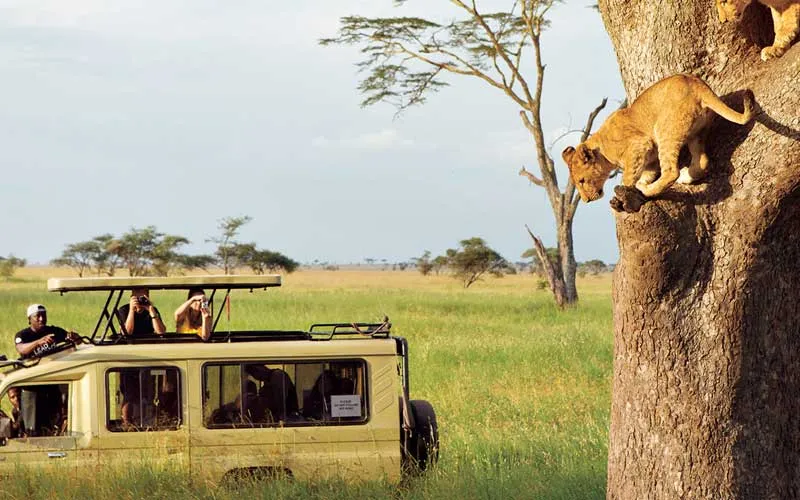
Modern top safari tour operators are now navigating a complex tension between two forces: the need for scalable, sustainable tourism models and the desire for hyper-personalized, low-impact wilderness access. The current systemic evolution is toward “conservation-led” operations. In this model, the tour operator is not just a facilitator of movement, but an active participant in the protection of the land. This is the new “gold standard,” where operational excellence is measured by the longevity of the habitat as much as the comfort of the guest.
Conceptual Frameworks and Mental Models
-
The Ecological Alignment Model: Does the operator plan around the movement of wildlife, or the limitations of the guest’s calendar? Top-tier operators design itineraries that follow natural migratory cycles, prioritizing ecosystems over political borders.
-
The Logistical Resilience Framework: How many “points of failure” are in an itinerary? A fragile itinerary relies on single-path light aircraft transfers with no ground alternatives. A resilient itinerary incorporates buffers for weather-related flight cancellations and alternative route mapping.
-
The Conservation-Integration Metric: Is conservation a marketing sidebar, or is it woven into the financial and operational structure? Organizations that actively fund human-wildlife conflict mitigation or ranger training typically demonstrate a higher level of field-based competence.
Key Categories and Variations
| Category | Typical Focus | Best For | Trade-offs |
| Conservation-Led Luxury | Large-scale wilderness management | Serious wildlife/habitat enthusiasts | Significant cost, limited availability |
| Bespoke Tailor-Made | High-touch personalization | Specific interests (e.g., photography) | Requires extensive planning phase |
| Owner-Operated Boutique | Deep field expertise | Experienced travelers | Small infrastructure, high demand |
| Regional Specialists | Deep geographical/cultural knowledge | Country-specific, deep-dive travel | Limited multi-country scalability |
| Global Institutional | Reliability and scale | First-time visitors, family groups | Less “off-the-beaten-path” access |
Decision Logic: If your objective is a “once-in-a-lifetime” encounter with specific species, select an operator with a proven footprint in that specific habitat. If your goal is a high-comfort entry into wilderness exploration, focus on institutions with robust medical and emergency support networks.
Detailed Real-World Scenarios
-
The Migration Pivot: A client is in the Serengeti when unseasonal rains flood a critical airstrip. An inferior operator cancels the next leg; a top-tier operator activates a pre-vetted ground-transfer plan through a local partner to bypass the closed strip and maintain the schedule.
-
The Photographic Specialist: A guest requires specific lighting and vehicle positioning for leopard tracking. An operator without dedicated “photographic-trained” guides will fail; one with specialized field-expertise will prioritize positioning, engine silence, and patience.
-
The Medical Extraction: A guest sustains a non-life-threatening but debilitating injury in a remote part of the Okavango Delta. The strength of the operator’s membership in evacuation networks (e.g., AMREF or local equivalents) becomes the deciding factor in transport speed.
Planning, Cost, and Resource Dynamics
The cost structure of safari travel is rarely intuitive. It includes high-fixed-cost elements like park fees, conservation levies, and aircraft fuel, which remain constant regardless of the accommodation “tier.”
| Cost Component | Nature of Expense | Variability |
| Fixed Conservation/Entry Fees | Per day/per park | Rigid |
| Logistical Orchestration | Professional fee | Varies by complexity |
| Field/Guide Expertise | Talent premium | Significant differentiator |
| Accommodation/Comfort | Elastic | Highly variable |
Tools, Strategies, and Support Systems
-
Real-time Migration Tracking: Technologies that provide data on animal movement to optimize game-drive locations.
-
Vetted Communication Channels: Satellite-linked communication systems between the vehicle, the lodge, and the regional control center.
-
Redundant Logistics Networks: A pre-established panel of local operators in each region who can be tapped if the primary service fails.
-
Field-Expert Briefings: Pre-departure deep-dives into the local ecological conditions rather than generic destination guides.
Risk Landscape and Failure Modes
The primary taxonomy of risk includes environmental failure (weather-driven isolation), mechanical failure (vehicle/aircraft breakdown), and human factor failure (poor guide judgment). The most common compounding risk is “itinerary rigidity.” When a plan is too tight, a single breakdown—which is statistically inevitable in wild environments—leads to an total operational collapse. The top operators mitigate this by building “slack” into their itineraries.
Governance, Maintenance, and Long-Term Adaptation
Review your safari arrangements with the same discipline used for high-stakes business investments. An audit should include:
-
Communication Audit: How quickly did the operator respond to a change in the itinerary during the planning phase?
-
Field Vetting: Are the guides employed directly by the lodge/operator, or are they outsourced freelancers? Direct employment typically ensures better training and safety standard enforcement.
-
Operational Trigger: If the operator cannot provide a clear, written contingency for a flight cancellation or medical evacuation, they have failed the basic requirement for remote operations.
Measurement, Tracking, and Evaluation
-
Indicator 1: Resolution Velocity. During the planning phase, how long does it take for the operator to provide a solution to a complex “what-if” request?
-
Indicator 2: Guide Retention Rate. A high turnover of field staff is a leading indicator of a failing organizational culture.
-
Indicator 3: Qualitative Signal. Does the operator prioritize conservation and community impact? This is often the best indicator of their long-term viability and moral legitimacy.
Common Misconceptions and Oversimplifications
-
“The cheapest tour is the best value.” Often, the cheapest tours suffer from under-maintained vehicles and lower-paid, less-experienced guides, increasing the risk of mechanical or safety failures.
-
“All lodges in a region are the same.” A lodge’s location within a concession versus a national park can radically alter the density of wildlife and the degree of privacy.
-
“I can just book my own flights and hotels.” In remote wilderness areas, you lose the “safety net” of an integrated operator, leaving you isolated in the event of local disruptions.
Conclusion
True success in the safari sector is measured by the lack of incident. When everything works, the traveler is unaware of the immense logistical apparatus operating in the background—the radio coordination, the vehicle maintenance, the park permit management, and the ecological forecasting. The top safari tour operators are defined by their ability to make this complexity invisible. By prioritizing organizational resilience, institutional expertise, and conservation integrity over marketing noise, one can ensure that the journey remains focused on the wilderness, rather than the logistics of reaching it.