Luxury Wine Destinations USA: A Guide to Elite Viticultural Travel
The American wine landscape is frequently misunderstood as a static collection of tasting rooms and picturesque estates. In reality, it is a sophisticated, highly volatile economic and ecological ecosystem that functions at the intersection of agriculture, hospitality, and cultural curation. For the discerning traveler, the pursuit of exceptional wine is rarely about the mere consumption of a beverage; it is an intellectual engagement with the forces of geology, climate, and human stewardship. A truly premium experience within this sector requires a departure from the superficial metrics of popularity—crowd size, social media visibility, and mass-market acclaim—and a move toward a deeper comprehension of how specific regions maintain their institutional integrity under the pressures of global demand.
To approach the luxury wine destinations usa map with precision is to recognize that the most significant value is found in the “frictionless” integration of product and place. The elite destination is one that manages the delicate balance between public access and private preservation, ensuring that the terroir—the very essence of the soil and microclimate—remains untarnished by the throughput of high-volume tourism. This analysis deconstructs the structural components of these top-tier destinations, offering a framework for evaluating their long-term viability and the quality of their experiential offerings.
Understanding “luxury wine destinations usa”
The term “luxury” in the context of viticultural tourism is often misappropriated, frequently used to denote high price points or opulence in decor. However, when examining luxury wine destinations usa residents rely on as benchmarks, the definition must shift toward access and intellectual engagement. A luxury experience is not defined by the presence of gold-leaf gilding or the exclusivity of a waitlist, but by the level of access afforded to the winemaking process, the history of the land, and the nuances of the vintage.
A significant risk in the current landscape is the “commercial homogenization” of wine regions. As regions rise in prestige, they often face a temptation to scale operations, leading to a dilution of the very authentic markers that initially defined them. The luxury wine destinations usa market encompasses both established titans—where the infrastructure for high-end hospitality is fully realized—and emerging frontiers, where the value lies in the raw, unrefined potential of a new terroir. Discerning travelers must learn to distinguish between these categories, as the decision-making logic for an established Napa Valley estate differs profoundly from an investigative trip to a developing AVA (American Viticultural Area).
Deep Contextual Background
American winemaking has evolved through a turbulent arc, from the pre-Prohibition era of thriving regional production to the near-total industry collapse of the 1920s and 30s. The post-Prohibition “renaissance” was defined by a shift toward varietal precision, culminating in the 1976 Judgment of Paris, which fundamentally altered the global perception of the American product. This period of rapid expansion established the infrastructure—the physical winery buildings, the distribution networks, and the hospitality tiers—that defines the current market.
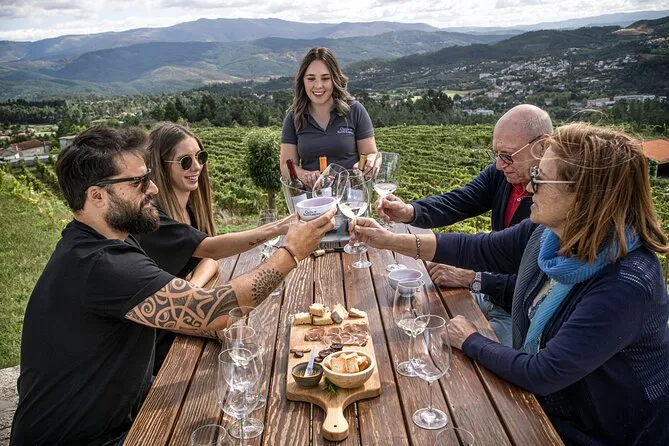
In the contemporary era, the focus has pivoted toward “value-added” experiences. Wineries are no longer just production facilities; they are complex cultural institutions integrating fine dining, architectural exhibition, and educational programming. This evolution is driven by a demographic shift toward “experience-based consumption,” where the value of a bottle is tied to the narrative and spatial experience of its origin. Understanding this systemic transition is essential for any serious study of the modern viticultural landscape.
Conceptual Frameworks and Mental Models
To evaluate any candidate for a premium trip, consider these analytical frameworks:
-
The Terroir-Access Ratio: Does the property prioritize the preservation of its viticultural assets, or is the land primarily treated as a venue for event hosting? A high ratio signifies a dedication to agricultural excellence.
-
Operational Intelligence: Observe how a destination manages service during peak harvest periods. True excellence is defined by the ability to maintain composure and quality under logistical stress.
-
Architectural Cohesion: Does the physical structure of the winery harmonize with the landscape, or is it an imposition? Cohesion often signals a deeper respect for the natural limitations and advantages of the site.
Key Categories or Variations
| Category | Typical Driver | Environmental Impact | Ideal Traveler Profile |
| Estate-Centric | Historic Pedigree | High preservation | The purist/historian |
| Boutique/Micro | Small-batch exclusivity | Low footprint | The investigative enthusiast |
| Regional Clusters | Integrated amenities | Moderate to High | The multi-day explorer |
| Emerging Terroir | Experimental innovation | Minimal infrastructure | The early-adopter researcher |
Decision Logic: When evaluating the luxury wine destinations usa scene, filter your selection by “Intent.” If your intent is educational, look for boutique estates with direct access to the winemaking team. If your intent is systemic immersion, focus on established regional clusters where transport, lodging, and dining are functionally integrated.
Detailed Real-World Scenarios
1. The Bottleneck Effect
-
Constraint: Peak harvest tourism leads to overcrowding and service dilution.
-
Decision Point: Does the winery utilize reservation systems to cap visitor flow, protecting the quality of the tasting experience?
-
Failure Mode: Allowing walk-ins that degrade the atmosphere for scheduled, high-intent visitors.
-
Second-Order Effect: Long-term erosion of brand prestige among the “connoisseur” demographic.
2. The Infrastructure Mismatch
-
Constraint: A historic site with antiquated facilities attempting to host large-scale events.
-
Decision Point: Does the property prioritize infrastructure modernization that preserves the historical aesthetic, or does it opt for temporary, intrusive solutions?
-
Failure Mode: Over-reliance on “event tech” that distracts from the authentic agricultural nature of the site.
Planning, Cost, and Resource Dynamics
| Cost Element | Investment Type | Variability |
| Logistics/Transit | Direct Expense | High (seasonal fluctuations) |
| Exclusive Access | Opportunity/Booking Cost | Very High (limited capacity) |
| Intellectual Labor | Time/Research | Moderate to High |
Tools, Strategies, and Support Systems
-
Regional AVA Maps: Utilize these to visualize the geological and microclimatic variance of a region before committing to a lodging location.
-
Proactive Scheduling: The most significant “tool” in the luxury wine destinations usa ecosystem is the direct outreach to booking managers, rather than relying on automated platforms.
-
Harvest Calendars: These provide the necessary context to avoid the chaotic “event” season unless the intent is specifically to witness the operational mechanics of production.
Risk Landscape and Failure Modes
The primary systemic risk is commoditization. Other risks include regulatory shifts in local land-use laws and the environmental impact of climate variability on long-term vine health.
Governance, Maintenance, and Long-Term Adaptation
The healthiest regions operate via a “Stewardship Model.” This includes active local viticultural associations that enforce high standards for environmental management and land preservation. Effective destinations engage in multi-year review cycles to adjust for environmental changes, ensuring that the industry remains a long-term asset to the community.
Measurement, Tracking, and Evaluation
-
Leading Indicators: Investment in soil regeneration and water conservation technologies.
-
Lagging Indicators: Stability in staff retention and the consistency of vintage ratings over long periods.
-
Qualitative Signal: The presence of an active “knowledge transfer” culture between the winemakers and the visitors, rather than a focus on passive consumption.
Common Misconceptions and Oversimplifications
-
Myth: “Expensive estates always produce the best wine.” Correction: Price is often a reflection of branding and hospitality investment, not strictly viticultural quality.
-
Myth: “Wine tourism is inherently sustainable.” Correction: High-volume tourism can place immense strain on rural water and waste infrastructure.
-
Myth: “All regions are equal in their infrastructure.” Correction: Established regions like Napa or Sonoma possess a “hospitality layer” that emerging regions often lack, impacting the overall travel experience.
Conclusion
Evaluating the luxury wine destinations usa landscape demands an intellectual rigor that matches the sophistication of the industry itself. By recognizing that the value of an estate lies in its structural and ecological stewardship, the traveler can move beyond the superficial trends of the tourism market. The most enduring experiences are those where the visitor is treated as a participant in a long-standing agricultural tradition, rather than a transient consumer.