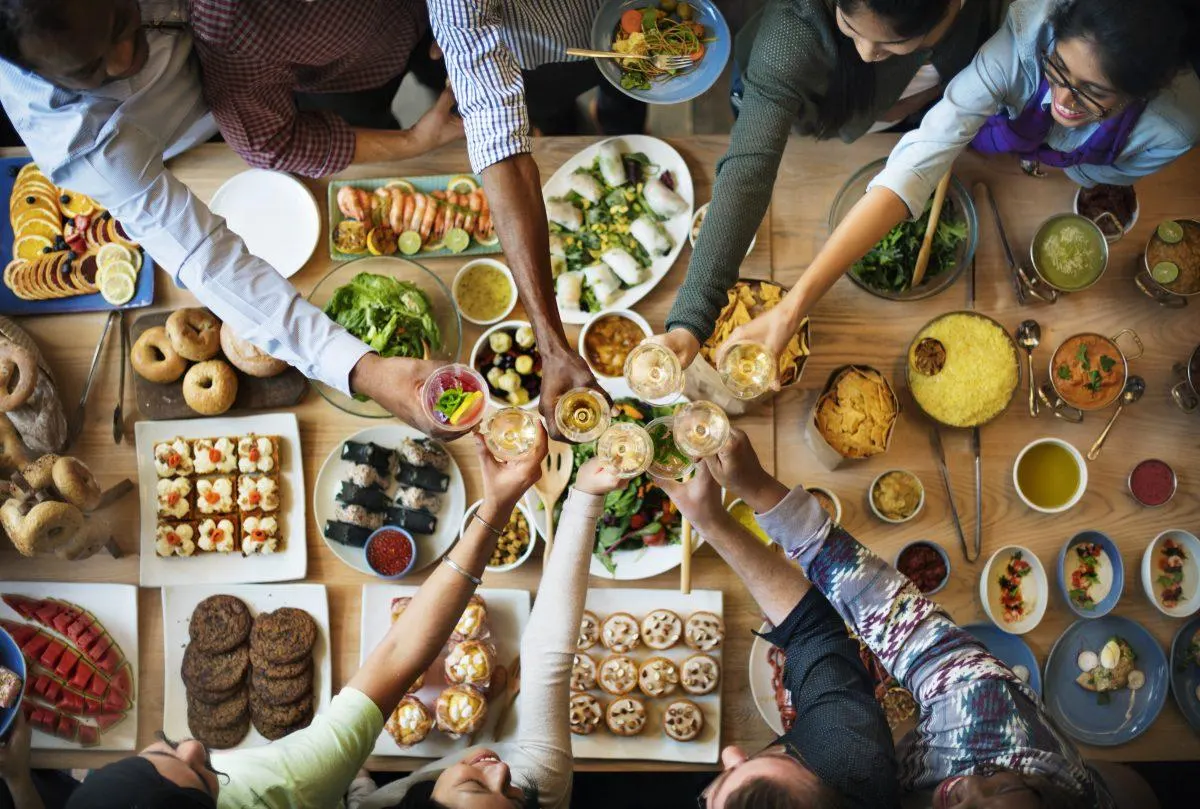
The Definitive Guide to Top Culinary Experiences in America: An Editorial Perspective
The American culinary narrative is not a singular, linear progression but a vast, chaotic, and beautiful accumulation of arrivals. It is a mosaic that defies simple classification, where regional identities—honed by specific geographies and migration patterns—collide with a relentless drive for innovation. To engage with the food of this country is to engage with its history, its social anxieties, and its geography, all plated in ways that constantly shift.
Identifying what constitutes a definitive, high-level gastronomic encounter requires moving past the superficial metrics of popularity or the narrow confines of white-tablecloth fine dining. Instead, one must view the landscape through a wider aperture, acknowledging that the most significant meals are often those that act as prisms, refracting the culture, labor, and intent of the people who created them. True depth in this field requires an understanding of how ingredients, heritage, and modern technique intersect in an economy of changing expectations.
This exploration aims to serve as a framework for the discerning observer. It does not seek to provide a static “best-of” list, which would be obsolete by the time it reaches print, but rather to establish a methodology for how to evaluate, seek, and understand the most profound food experiences available across the United States.
Understanding “top culinary experiences in america”
The phrase top culinary experiences in america is frequently misappropriated as a synonym for “most expensive” or “highest-rated by consensus.” This is a fundamental error. When we speak of top-tier experiences, we are referring to instances where the food, the service, the setting, and the intellectual or emotional context align to create something that transcends simple sustenance.
A “top” experience can be a meticulously prepared seven-course tasting menu in a high-density urban center, but it can just as validly be a singular, perfect plate of regional barbecue served on a paper tray in a roadside shack that has been firing the same pit for three generations. The commonality between these two polar examples is not the price point; it is the presence of an uncompromising vision and a mastery of craft.
Misunderstandings often arise from the assumption that the culinary landscape is uniform. It is not. It is intensely localized, and the criteria for success in one region—say, the precise crust development on a deep-dish pizza—are irrelevant when applied to the brisket culture of Central Texas. To pursue the best, one must accept that the benchmark is always relative to the intent of the kitchen.
Deep Contextual Background
The American food system is a creature of rapid, often violent, evolution. From the early adaptation of Indigenous staples by European settlers—corn, beans, squash, and game—the landscape was fundamentally transformed by the industrial revolution, which introduced standardized preservation and refrigerated transit. This created the first wave of nationalized food, where regional isolationism began to erode in favor of mass-produced stability.
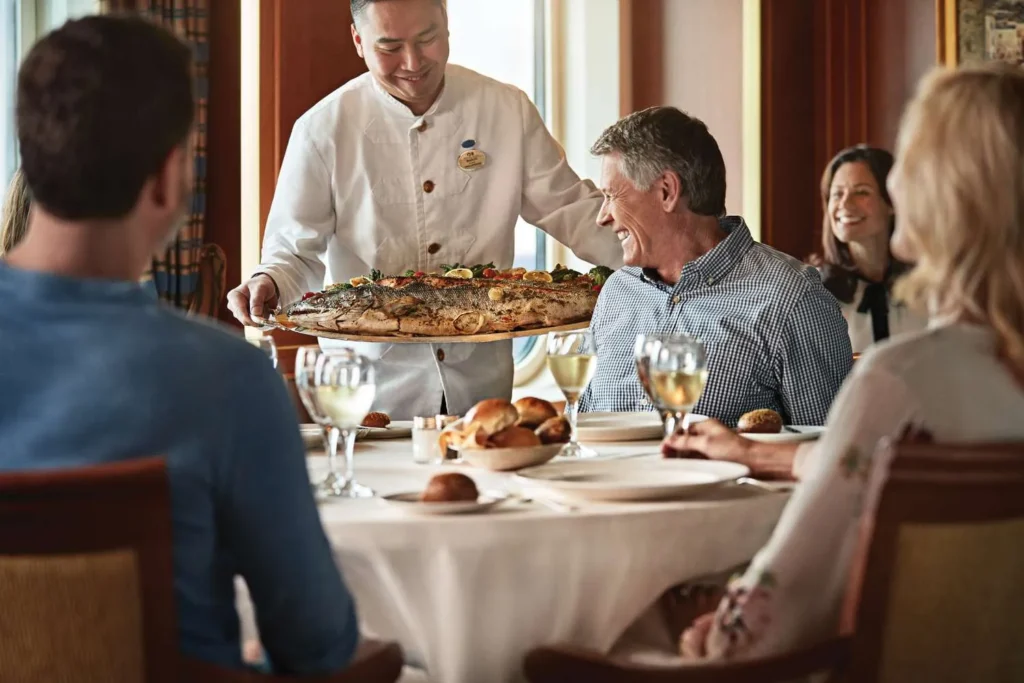
By the mid-20th century, the post-war era prioritized efficiency and convenience, leading to a surge in processed ingredients and a decline in fresh, localized sourcing. However, the subsequent “Culinary Revolution” of the late 1960s and 1970s—sparked in places like Berkeley—represented a structural correction. This movement re-centered the ingredient, shifting the focus back to seasonal, hyper-local, and artisanal methodologies.
Today, the 2026 culinary climate is defined by a tension between these historical layers. We are seeing a “purposeful” return to humble ingredients, where chefs are eschewing the high-tech, lab-grown, or heavily processed alternatives of the recent past in favor of fiber-rich, heritage pulses and traditional techniques. This shift is not merely aesthetic; it is an economic and social response to increased food costs and a growing, data-driven awareness of digestive health.
Conceptual Frameworks and Mental Models
To effectively navigate the top culinary experiences in america, we utilize several mental models to filter the noise:
-
The “Authenticity vs. Originality” Dialectic: Does the experience seek to preserve a specific cultural lineage, or does it seek to break from it? Both can be “top” experiences, but they require different evaluative criteria.
-
The Proximity-to-Source Index: How many steps exist between the ingredient’s origin and the plate? In regions like the Pacific Northwest or the Hudson Valley, lower-latency food is a primary driver of quality.
-
Cultural Resonance: To what extent does the meal function as a historical document? This model privileges food that captures a specific time, place, or community struggle, such as the resurgence of Native American cuisine that utilizes pre-colonial ingredient sets.
-
The Immersive Factor: This evaluates how much the environment—the architecture, the pacing, the service rhythm, and the storytelling—enhances the consumption of the food.
Key Categories or Variations
| Category | Typical Driver | Trade-off |
| Heritage/Ancestral | Historical continuity | Potential for rigid dogma |
| Hyper-Seasonal/Fine Dining | Technical innovation | Often high cost, low accessibility |
| Regional Specialty (Casual) | Uncompromising process | Limited menu variability |
| Modern Synthesis | Creative fusion of cultures | Risk of losing distinct identity |
Decision Logic: If your goal is to understand a region’s history, prioritize Heritage/Ancestral. If your goal is to understand the absolute current frontier of technical mastery, prioritize Hyper-Seasonal/Fine Dining.
Detailed Real-World Scenarios
-
The Regional Pilgrimage: Seeking authentic barbecue in the Carolinas versus Texas. Constraints involve timing (many pits close when the meat is gone) and lack of formal service. Failure mode: Expecting a full-service restaurant experience and being disappointed by the lack of amenities.
-
The Tasting Menu Marathon: Navigating a 15-course meal in a major metropolitan hub. Constraints involve significant financial outlay and strict temporal commitments. Second-order effect: The “palate fatigue” that occurs toward the end of the meal, often rendering final courses unappreciated.
-
The Urban “Hidden Gem” Search: Identifying high-quality ethnic enclaves—such as specialized dumpling houses or regional Mexican spots—that lack heavy online curation. Constraint: Requires local knowledge and a willingness to operate outside of standard reservation platforms.
Planning, Cost, and Resource Dynamics
| Factor | Low-Complexity Experience | High-Complexity Experience |
| Lead Time | Days/Weeks | Months/Years |
| Financial Range | $25–$75 | $300–$1,000+ |
| Opportunity Cost | Time spent navigating queues | Time spent securing access/travel |
The hidden cost of these experiences is often informational—the time required to vet sources and understand the context of what you are consuming. Relying on aggregate rating sites often leads to “popularity traps,” where places are prioritized for high volume rather than genuine culinary excellence.
Tools, Strategies, and Support Systems
-
Direct Producer/Chef Research: Monitor publications that interview chefs about their sourcing.
-
Historical/Cultural Context Maps: Use regional food histories to guide your geography (e.g., studying the Great Migration to understand specific Southern foodways in Northern cities).
-
Off-Peak Scheduling: Booking during less popular days to ensure a higher quality of service and reduced pressure.
-
Direct Communication: Calling or emailing a restaurant to ask about their current sourcing or philosophy.
-
Data-Agnostic Exploration: Ignoring aggregate scores and focusing on specialized food writers who have lived in a region for decades.
Risk Landscape and Failure Modes
-
Compounding Expectation: The “hype cycle” where media buzz creates an impossible standard for the kitchen to meet.
-
The Tourist Trap Proxy: Falling into a “culinary experience” that is marketed to outsiders while local communities ignore it.
-
Structural Variability: Inconsistencies in staffing or supply chain that can degrade a reputation-based experience.
Governance, Maintenance, and Long-Term Adaptation
To keep your personal list of top culinary experiences in america relevant, establish a biannual “Audit Cycle.” As chefs move, menus change, and ownership shifts, a restaurant that was a bastion of excellence in 2024 may have lost its edge by 2026. Use a “Layered Checklist” to re-verify:
-
Has the executive chef or lead pitmaster changed?
-
Has the sourcing model shifted due to economic pressures?
-
Is the current feedback from local, expert-level diners still echoing the original positive signals?
Measurement, Tracking, and Evaluation
Use both leading and lagging indicators to track your progress:
-
Leading Indicators: Research hours spent, number of regional food books read, discussions with local food historians.
-
Lagging Indicators: The number of memorable, distinct meals that you can still describe in detail six months later.
-
Documentation: Maintain a journal (digital or physical) that notes not just the meal, but the context—why was this meal significant in the moment?
Common Misconceptions and Oversimplifications
-
“Authenticity is static”: Authenticity is a moving target. Food, like language, evolves through contact.
-
“The most expensive is the best”: Price is a function of labor, rent, and overhead, not necessarily quality or taste.
-
“Only major cities have the best food”: Many of the most profound top culinary experiences in america occur in overlooked small towns or rural settings where local produce remains untainted by urban industrial supply chains.
-
“Fusion is inherently less authentic”: Much of American history is a story of fusion; it is the fundamental nature of the cuisine.
Conclusion
The pursuit of the top culinary experiences in america is a lifelong endeavor that demands both intellectual rigor and sensory curiosity. It is not about accumulating visits to “bucket list” locations; it is about developing an editorial eye—and palate—for what matters. By grounding your choices in historical context, respecting regional limitations, and prioritizing the craft over the trend, you can navigate the American foodscape with agency and depth. Stay adaptable, maintain a critical distance from the hype, and recognize that the most significant meals are often those that teach you something new about the place you are in.