Best Mountain Lodges United States: A Definitive Guide
The American mountain lodge is far more than a place of temporary shelter; it is a structural manifestation of a uniquely North American relationship with the wilderness. For over a century, these institutions have functioned as the primary interface between the untamed, often inaccessible high-country landscape and a society increasingly seeking refuge from the relentless velocity of urban industrialization. The evolution of the mountain lodge—from the rugged, hand-hewn pioneer cabins of the late 19th century to the sophisticated, climate-resilient “mountain modern” structures of today—mirrors the broader history of American conservation and the professionalization of the leisure economy.
To engage with the high-altitude hospitality sector is to participate in an exercise of logistical and environmental negotiation. The most exceptional properties are not merely those with the most luxurious appointments, but those that have achieved a state of functional harmony with their immediate ecosystem. These lodges serve as high-altitude laboratories of design, where the constraints of heavy snowfall, steep topography, and geographical isolation are transformed into architectural assets rather than mere burdens to be overcome.
This analysis provides a structural framework for understanding and evaluating the best mountain lodges united states has to offer. By moving beyond surface-level aesthetics and travel-brochure tropes, we explore the institutional integrity, operational resiliency, and environmental philosophy that define the true upper echelon of this category. For the traveler who views an itinerary as an intellectual asset, this guide establishes the criteria necessary to identify institutions that provide genuine, long-term experiential value.
Understanding “best mountain lodges united states”
The primary misunderstanding in identifying the best mountain lodges united states residents frequently encounter is the conflation of “luxury” with “convenience.” In the mountain environment, true luxury is rarely about the availability of high-end consumer goods; it is about the mastery of the environment and the seamless management of the logistical frictions inherent to altitude. Travelers often mistake proximity to a resort’s commercial village for the quality of the lodge itself, yet the most profound experiences are frequently found in properties that prioritize geographic immersion—the quietude of the forest, the clarity of the air, and the structural integrity of the building itself—over the noise of synthetic “après-ski” scenes.
To evaluate the best mountain lodges united states has to offer, one must move past aggregate review scores, which often favor properties that successfully game the digital feedback loop. A truly definitive assessment requires an interrogation of a property’s “operational intelligence”—its ability to maintain service excellence in the face of seasonal volatility, labor challenges, and the inherent fragility of mountain infrastructure. Oversimplifying this sector leads to the selection of generic “resort-style” hotels that happen to be situated at high elevation but lack the soulful connection to the landscape that defines the classic lodge tradition. True excellence is found in the architectural and cultural cohesion between the building and the mountain.
Deep Contextual Background
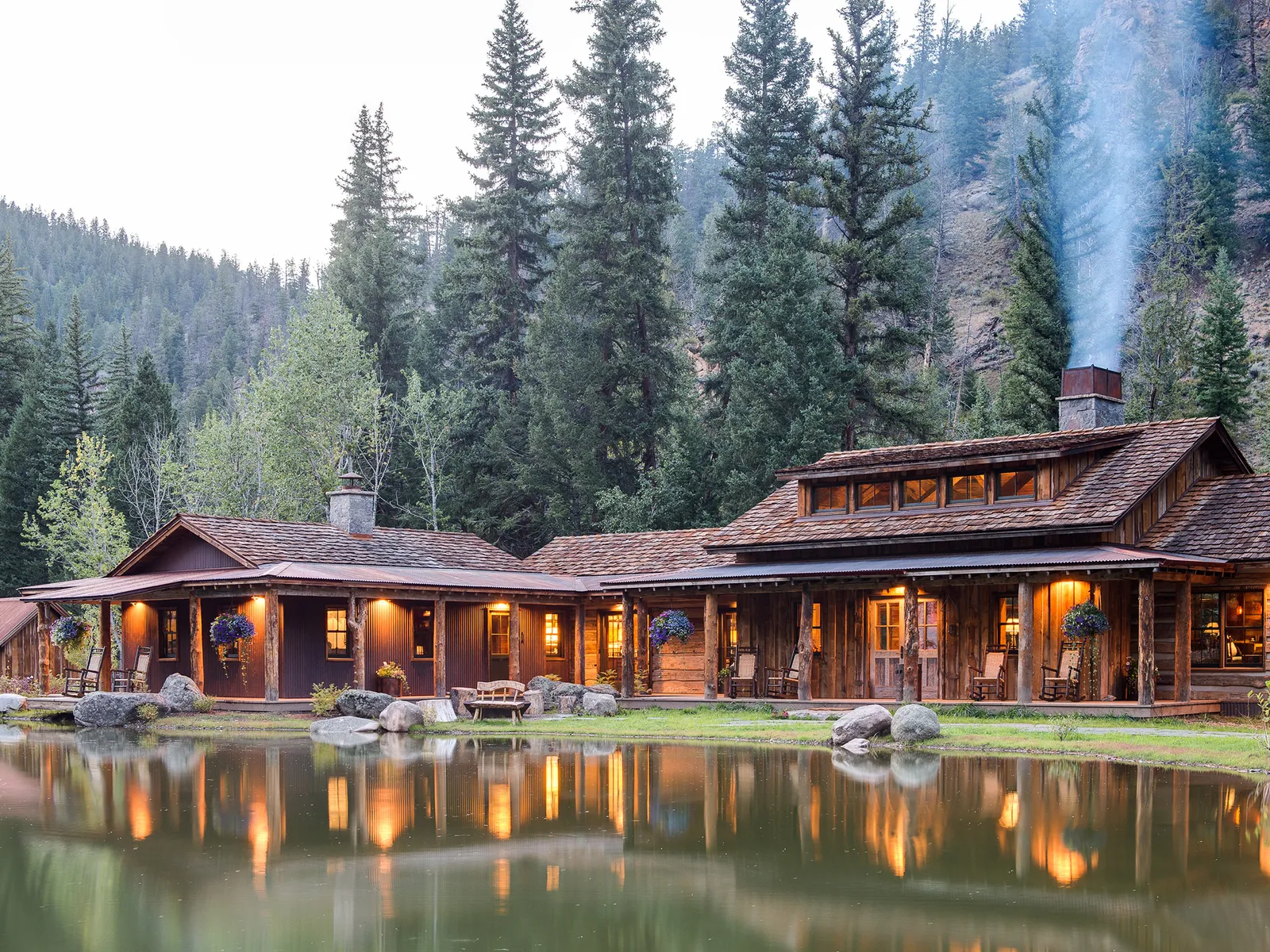
The American mountain lodge emerged from a convergence of the late 19th-century conservation movement and the subsequent “Rustic Style” of architecture. This movement, championed early on by National Park Service visionaries and local craftspeople, sought to create structures that looked as though they had emerged naturally from the geology they inhabited. This “naturalist design” philosophy utilized heavy timber, native stone, and overhanging gables to minimize the visual impact of human construction on the vast mountain panoramas.
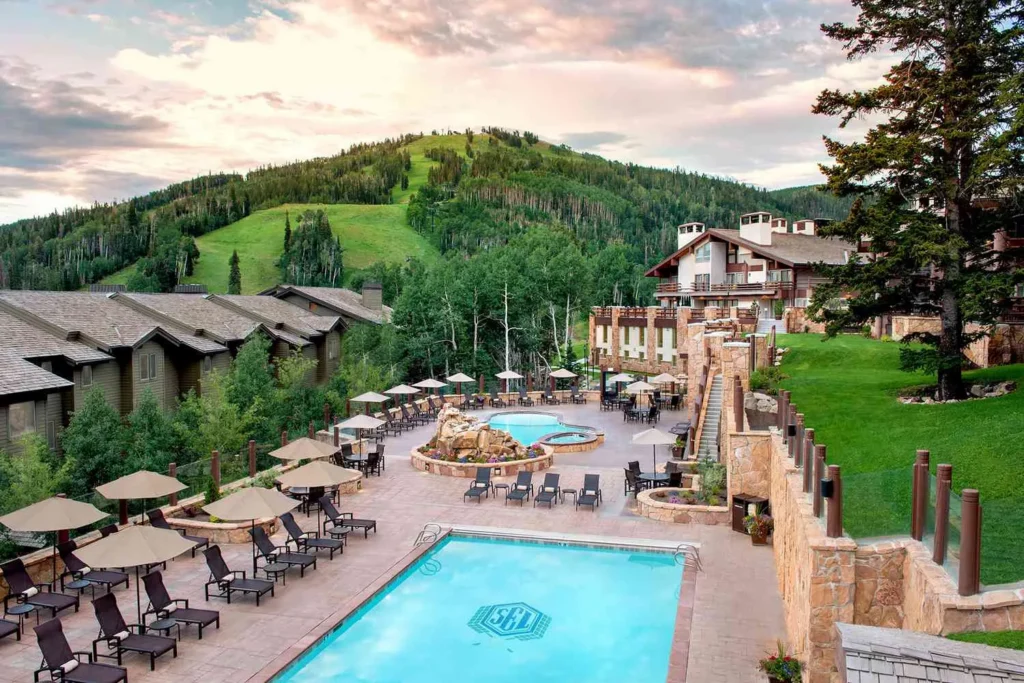
As the 20th century progressed, federal programs like the Civilian Conservation Corps (CCC) and the Works Progress Administration (WPA) during the Great Depression institutionalized this aesthetic across the American West, creating a lasting legacy of public-sector lodges that define our modern perception of mountain travel. Post-war development, however, introduced the concept of the “ski-resort hotel,” which prioritized throughput and commercial efficiency over the “naturalist” ideal. Today, we are in a period of architectural synthesis: the contemporary “mountain modern” movement, which retains the focus on natural materials while stripping away the excessive ornamentation of the 20th-century “ski lodge,” resulting in structures that are both aesthetically sparse and deeply functional.
Conceptual Frameworks and Mental Models
To evaluate properties at the elite level, apply these analytical frameworks:
-
The Immersion Factor: How effectively does the lodge facilitate a direct engagement with the wilderness? A high-performing lodge minimizes the distance between the interior climate-controlled space and the exterior environment.
-
The Operational Resiliency Metric: Can the property deliver excellence during a record-breaking snowstorm? The quality of a lodge is revealed not in clear weather, but in its management of the logistical friction during periods of environmental stress.
-
The Contextual Cohesion Model: Does the architecture reflect the specific geology and forest composition of the region? The finest lodges are “geographic extensions,” not “imported archetypes.”
Key Categories and Variations
| Category | Primary Focus | Ideal Environment | Trade-off |
| National Park Heritage | Historic Preservation | National Park corridors | High occupancy/Noise |
| Alpine Modern | Architectural Design | High-elevation peaks | Limited physical history |
| Private Enclave | Absolute Solitude | Remote ridgelines | High logistical barrier |
| Resort-Integrated Lodge | Convenience/Activities | High-traffic ski hubs | Loss of “wilderness” feel |
Decision Logic: When evaluating the best mountain lodges united states listings, apply a filter based on your primary mission. If the mission is “recovery,” select for low-traffic, high-isolation enclaves. If the mission is “exploration,” select for resorts integrated with high-quality guide services and terrain access.
Detailed Real-World Scenarios
1. The High-Season Logistical Failure
-
Constraint: Peak holiday demand exceeding the lodge’s service capacity.
-
Decision Point: Does the lodge prioritize guest-to-staff ratios, or does it maximize occupancy during peak windows?
-
Failure Mode: The “service dilution” effect, where the lodge’s hospitality becomes indistinguishable from a standard mid-market hotel.
-
Second-Order Effect: Irreparable damage to the brand’s reputation among legacy guests.
2. The Wilderness Integration
-
Constraint: A lodge positioned for deep winter access.
-
Decision Point: Utilizing on-site, specialized guides who manage the mountain terrain in partnership with the lodging experience.
-
Success Indicator: The seamless transition from a high-performance morning of terrain exploration to an evening of low-intensity caloric recovery at the lodge.
Planning, Cost, and Resource Dynamics
| Factor | Heritage/Legacy Property | Mountain Modern/Boutique |
| Operational Focus | Historical Preservation | Contemporary Comfort |
| Service Model | Institutional/Formal | Bespoke/Informal |
| Price Volatility | Moderate | High (Seasonality-driven) |
Tools, Strategies, and Support Systems
-
Geologic Auditing: Research the terrain features and forest type surrounding the lodge. Properties built on stable rock foundations with clear “defensible space” for fire mitigation are more resilient and reliable.
-
The “Guide-Lodge Link”: Investigate whether the lodge has in-house guiding infrastructure. The best lodges provide the logistics; the second-best merely provide the referral.
-
Off-Peak Reconnaissance: If a property is on your shortlist, consider a shoulder-season visit. It provides a clearer view of the lodge’s “resting” culture without the distraction of high-season crowds.
Risk Landscape and Failure Modes
The primary systemic risk is infrastructure obsolescence. Many historic lodges, while aesthetically superior, struggle to integrate modern HVAC, connectivity, and accessibility requirements. The failure mode is the “compromised experience,” where the historic envelope of the building becomes a cage for outdated mechanical systems.
Governance, Maintenance, and Long-Term Adaptation
The most stable mountain lodges treat their physical infrastructure as a perpetual restoration project. Governance that prioritizes the “building envelope” and mechanical efficiency over cosmetic upgrades is the hallmark of an institution built for the next century of operation. Layered checklists—covering everything from roof-load bearing capacity to the seasonal “winterizing” of plumbing—are the unglamorous but necessary indicators of lodge health.
Measurement, Tracking, and Evaluation
-
Leading Indicators: The frequency and specificity of the property’s maintenance communications.
-
Lagging Indicators: The consistency of staff tenure—a high turnover rate in a mountain environment often indicates deep operational dysfunction.
-
Qualitative Signal: The “soundscape” of the lodge. A well-designed mountain lodge manages acoustic privacy even in large, timbered communal spaces.
Common Misconceptions and Oversimplifications
-
Myth: “Rustic” means “unrefined.” Correction: True rustic design is an exercise in extreme technical precision and material selection.
-
Myth: “Slope-side is always best.” Correction: Slope-side often implies high noise and lack of privacy; the “best” experience is often a short, managed commute away from the high-traffic zones.
-
Myth: “All wood buildings are the same.” Correction: Material sourcing—local vs. imported—dictates the building’s ability to “breathe” in the mountain climate.
Conclusion
Evaluating the best mountain lodges united states travelers can visit requires a departure from the consumerist checklist. It demands an appreciation for the structural, historical, and environmental dimensions of mountain hospitality. By prioritizing properties that demonstrate a commitment to their specific geography and a mastery of the logistical challenges inherent to altitude, the traveler can ensure their investment in travel yields more than a temporary stay—it yields a deepening of one’s relationship with the American high country.