Structural Analytics of High-Tier Rail Logistics: Comprehensive Operational and Spatial Blueprinting
Luxury train travel overview. The organization of premium rail expeditions necessitates a comprehensive understanding of terrestrial mechanics, trackage-rights distribution, and spatial asset management. Within the contemporary landscape of high-tier global mobility, the procurement of an elite rail experience has evolved beyond the simple reservation of premium sleeper cabins. Discriminating travelers frequently observe that substantial financial investment alone cannot guarantee seamless mechanical execution or personal comfort over historic iron networks. True continuity within a complex overland schedule demands an analytical planning methodology that prioritizes operational insulation over superficial heritage aesthetics.
Many high-end terrestrial itineraries are built using a fractured procurement model, where rail passages, station transfers, and intermediate hotel linkages are arranged through isolated corporate channels. This disjointed approach introduces systemic structural vulnerabilities, as independent rail operators and national infrastructure networks rarely communicate across administrative borders. A minor freight traffic bottleneck or mechanical locomotive failure can propagate instantly through a regional network, invalidating downstream hospitality arrangements. Consequently, strategic itinerary design must transition toward an integrated systems model that views geography, time, and track infrastructure as interdependent components.
Establishing operational resilience within a premium overland itinerary requires realistic stress testing of every transition phase, station platform interface, and mechanical service layer. Planners must assess changing regional railway regulations, localized labor dynamics, and seasonal track maintenance patterns with absolute professional detachment. This extensive manual provides an in-depth examination of elite rail architecture, offering structured frameworks, operational metrics, and adaptation strategies. These methodologies are designed to protect substantial capital investments from fragmentation while preserving the cognitive clarity and physical well-being of the traveler.
Understanding “luxury train travel overview”
Deconstructing the Operational Realities
The technical structural documentation compiled within a comprehensive luxury train travel overview is frequently reduced by mass media to superficial descriptions of wood-paneled dining cars and uniformed stewards. This simplistic view ignores the complex engineering variables, strict track access politics, and physical kinetic forces that govern premium rail operations. A precise analysis of high-tier itinerary engineering must focus on active shock-absorption management and the protection of temporal value. The ultimate objective is ensuring that the traveler’s micro-environment continuously supports personal privacy, physical safety, and cognitive stamina.
The Vulnerability of Disconnected Transport Links
A primary structural failure in basic rail planning is the assumption that booking an expensive historic cabin independently yields a flawless journey. When the rail booking is isolated from necessary aviation gateways and ground handling networks, the entire journey remains vulnerable to systemic disconnections.
An expensive suite reservation on an ultra-luxury transcontinental train cannot guarantee fulfillment if the flight path lacks defensive scheduling buffers. Therefore, an analytical planning process must treat the station-platform phase as a critical risk zone rather than a simple administrative detail.
Operational Policy Variance and Kinetic Friction
Furthermore, premium rail vulnerability is heightened by a reliance on standard commercial ticket contracts that heavily favor the operating company or state network. High-end lines enforce strict cancellation schedules and maintain the unilateral legal right to alter itineraries due to track maintenance or regional congestion.
Without proactive contractual review or the secondary allocation of defensive capital, travelers are frequently left exposed to sudden route modifications. This exposure compromises corporate schedules, complicates the management of sensitive luggage assets, and generates severe mental fatigue.
Preserving Human Capital and Spatial Focus
Understanding these operational variables allows experienced planners to decouple the nominal cost of a voyage from its actual functional utility. An itinerary that prioritizes rapid geographical movement over human acclimatization introduces significant physical strain that diminishes the value of premium carriage spaces.
By analyzing how local track constraints, fueling logistics, and national border protocols interact, planners can build protective buffers into the schedule. This systematic methodology transforms rail coordination from a series of stressful transactions into a structured discipline that preserves human capital.
Deep Contextual Background: The Industrialization of Elite Rail
The Nineteenth-Century Expansion and Private Carriages
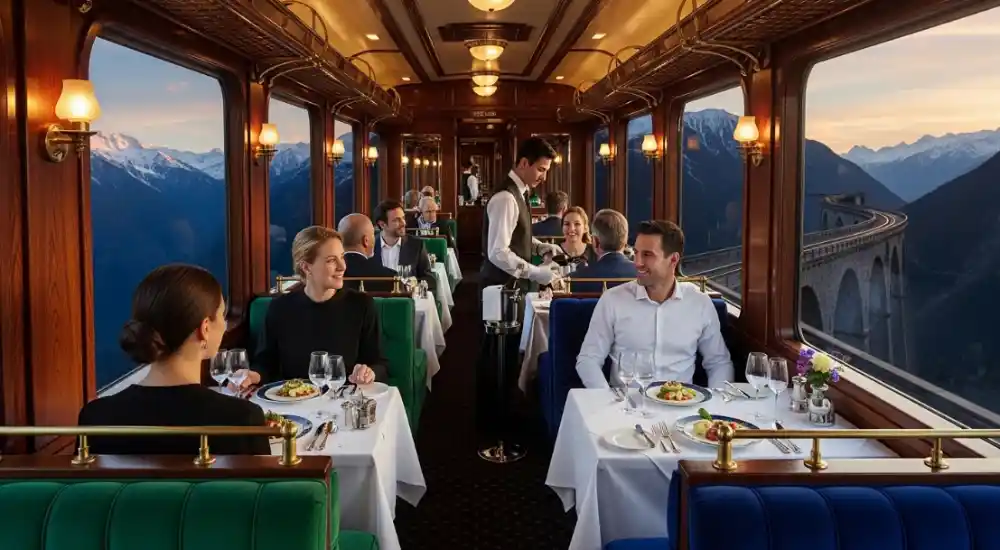
The historical trajectory of premium rail travel has shifted from low-velocity, elite private carriages to highly specialized, experiential hospitality operations. In the late nineteenth century, the expansion of continental rail networks was driven by industrial tycoons who demanded mobile extensions of their private estates.
These early journeys were executed via heavy, wooden and steel private carriages that built substantial chronological stability into the transcontinental schedule. The voyage pace was deliberate, allowing passengers to gradually adjust to changing temporal, linguistic, and cultural environments over many consecutive days on the rails.
The Mid-Century Decline and Heritage Revival
The mid-twentieth century expansion of commercial aviation and high-speed highway networks rapidly obsolete functional long-distance passenger rail, forcing operators to downsize massive fleets. Regional railway infrastructure shifted focus toward high-density commuter transport or bulk freight movement, which altered track maintenance priorities and schedule availability.
Concurrently, the preservation of historic rolling stock required specialized engineering knowledge that became increasingly rare as older workshops closed. The margins for error within these heritage schedules were heavily reduced, rendering premium journeys vulnerable to minor regional signaling disruptions.
The Digital Integration Matrix
The modern rail environment has been profoundly reshaped by the rise of digital global distribution networks and centralized algorithmic booking interfaces. These technologies create an illusion of total logistical simplicity, encouraging travelers to combine complex itinerary variants without evaluating localized track-sharing risks.
Today, this digitized environment faces rising congestion from regional freight corridors, volatile climatic shifting affecting track stability, and persistent technical labor shortages. This combination demands a return to deliberate, structural itinerary analysis to prevent high-end schedules from collapsing under sudden operational stress.
Conceptual Frameworks and Terrestrial Mental Models
The Kinetic Vibration Index
This mental model requires all rail options to be evaluated by calculating the precise relationship between bogie design, track gauge quality, and train velocity. A heritage train with traditional suspension operating over standard regional freight tracks yields a poor stabilization index.
By mapping an entire journey across this index, planners can identify hidden sources of physical discomfort and motion fatigue. This mapping allows them to substitute high-friction mountain lines with smoother modern tracks or superior private car configurations.
The Platform Custody Model
This framework treats the rail passenger as an asset that must remain within continuous, high-security, vetted environments during the transition from station to carriage. Secure environments include private terminal lounges, dedicated platform escorts, escorted ground transport, and verified onboard security zones.
An itinerary gap occurs whenever this custody chain breaks, exposing the traveler to unvetted public concourses or unreliable local transport providers. The objective of schedule construction under this model is to ensure that the release from one secure asset links directly to the acquisition of the next.
The Spatial Car Volume Ratio
This metric measures the balance between total carriage length and total passenger capacity within a specific train configuration. Premium travel should maximize this ratio, ensuring that the individual experiences uncrowded public lounges, rapid dining car access, and highly personalized service levels.
By prioritizing trains that maintain low passenger numbers per carriage, the planner insulates the traveler’s attention from crowd-induced friction. This protection preserves the exclusive atmosphere that characterizes genuine premium terrestrial travel.
Key Categories of Premium Rail Infrastructure
Grand Transcontinental Heritage Operators
This architecture features vintage, restored rolling stock operating across vast geographical expanses, focusing on historical romanticism and traditional elegance. Examples include the iconic routes traversing Europe or Asia, which utilize deeply polished wood finishes and period-correct dining protocols.
While this model provides deep historical immersion and exceptional culinary showmanship, it exposes the traveler to traditional suspension limitations during high-speed crossings.
Modern High-Comfort Regional Cruisers
This strategy involves utilizing newly engineered trains designed specifically for low passenger counts, optimizing the kinetic vibration index completely. These modern trains can operate over contemporary high-speed track networks with maximum stability, minimizing transit times between primary metropolitan points.
This configuration maximizes geographical efficiency and eliminates carriage rattling, though it sacrifices the historic aesthetic charm of vintage rolling stock.
Luxury Mountain Wilderness Shuttles
This complex structure utilizes specialized glass-domed observation cars designed for deep exploration of remote mountain ranges or alpine corridors. Because these operations are highly dependent on localized elevation changes, strict seasonal avalanche clearances, and shared single-track loops, they are structurally fragile.
A sudden shift in alpine weather patterns can invalidate a scheduled mountain pass instantly, forcing immediate train containment at regional sidings.
Evaluation of Premium Rail Architectures
The table below outlines the operational trade-offs inherent in different high-tier terrestrial architectures.
Realistic Decision Logic
When evaluating a multi-city rail proposal, a planner must calculate the total transit time required under a worst-case scenario. If the gap between train arrival and hotel check-in drops below the combined time of potential signaling delays, track shunting, and traffic, the schedule must be rejected. The planner must then choose between extending the station-side buffer or securing a route with superior trackage-rights priority.
Detailed Real-World Scenarios and Operational Stress Testing
Scenario A: The European Terminal Signaling Collapse
A traveler schedules an intricate connection between a private transcontinental heritage train and a regional express connection at a major metropolitan station.
Constraints and Local Factors
The station is simultaneously handling hundreds of standard high-speed commuter trains, local rail crews are staging a work-to-rule protest, and computer networks face sudden outages. The traveler’s heritage train is scheduled to arrive on Platform 12 at 4:15 PM, and the regional connection departs from Platform 2 at 4:45 PM.
Decision Points for the Planner
The organizer must determine whether to attempt the platform transfer with tight timing or deploy an independent ground escort team to manage luggage.
Failure Modes and Impact Analysis
Attempting a manual cross-platform transfer assuming nominal infrastructure functionality represents a classic structural planning failure during a localized labor dispute. The heritage train is held outside the terminal entry throat for forty minutes due to low signaling priority, causing the connection to fail.
Second-Order Effects
The regional train departs on time, leaving the traveler stranded on a crowded platform with heavy luggage assets. The downstream luxury hotel reservation in the next city is impacted, and expensive private sedan options must be deployed to execute the journey overnight.
Scenario B: The Southeast Asian Monsoon Track Displacement
An executive books an ultra-luxury rail journey through tropical forest corridors during the transitional shoulder season.
Constraints and Local Factors
The regional terrain experiences sudden, high-intensity precipitation events that cause ballast washout and subgrade instability beneath heavy steel rails. The itinerary schedules three consecutive days of remote wilderness transit without any intermediate highway access nodes nearby.
Decision Points for the Planner
The planner must decide whether to commit to the continuous rail passage or build in alternative extraction points using localized all-terrain transport.
Failure Modes and Impact Analysis
Designing an itinerary that depends entirely on unverified track stability during monsoon fluctuations ignores fundamental geological realities. A minor mudslide fouls a remote hillside cutting, forcing the train to halt indefinitely on a isolated passing loop.
Second-Order Effects
The traveler spends forty-eight hours confined to the static carriage environment, missing critical corporate meetings and international flight departures. The operational utility of the premium cabin drops significantly, generating severe mental frustration that superior onboard hospitality cannot resolve.
Scenario C: The Andean High-Altitude Traction Crisis
A private tour group coordinates an upscale rail expedition crossing a major mountain range using specialized narrow-gauge equipment.
Constraints and Local Factors
The route operates at extreme elevations where cold temperatures reduce steel rail adhesion and locomotives require specific turbocharger maintenance. The rail operator modifies the mechanical configuration two days before departure, reducing total power output to avoid mountain failures.
Decision Points for the Planner
The coordinator must choose between accepting the slower, modified journey or canceling the rail sector in favor of private aviation assets.
Failure Modes and Impact Analysis
Proceeding with the rail journey assuming the timeline remains intact despite mechanical downgrades represents an operational oversight. The underpowered train experiences severe wheel-slip on steep gradients, extending the mountain transit time by several hours.
Second-Order Effects
The train arrives at the summit terminal well after midnight, exposing the elderly tour group to freezing mountain temperatures and dark, unlit platforms. The substantial capital invested in the premium journey fails to deliver the expected comfort, causing long-term brand dissatisfaction.
Planning, Cost, and Resource Dynamics
Direct Financial Outlays vs. Logistical Insulation Capital
The implementation of a resilient premium rail experience requires an honest assessment of both explicit financial costs and hidden operational outlays. Planners frequently focus on securing high-category suites while ignoring the defensive capital allocation required to protect those assets from regional disruptions.
Securing a terrestrial itinerary against systemic failures demands that capital be deployed specifically for structural protection. This includes retaining pre-departure luxury hotel blocks, purchasing fully flexible first-class air corridors, and securing private station agency escorts.
These protective expenditures must be viewed as an insurance premium that preserves the temporal value and physical comfort of the overall journey.
The Hidden Cost of Route Density
When an upscale terrestrial schedule is designed with high route density and minimal station stops, the traveler faces a hidden cost: the loss of personal autonomy and relaxation. For a high-performing professional, constant night movement over irregular track joints introduces significant physical fatigue.
Factoring the value of structured stationary station days into the planning process ensures that premium carriage environments can actually be enjoyed. This methodology prioritizes restorative pacing over high-density, exhausting rail mileage accumulation.
Financial Exposure and Protection Resource Allocation
The table below demonstrates the financial and operational implications of different resource management choices during an international rail transition.
Tools, Strategies, and Support Systems
1. Independent Station Agency Liaison Networks
Retaining an independent, station-specific rail coordinator provides real-time oversight of local terminal logistics. This professional monitors platform assignment updates and handles local customs hurdles before the train arrives.
2. Multi-Contract Aviation Protection Links
Constructing air travel paths exclusively under a single airline alliance contract ensures that downstream flight connections are legally protected. If an early rail leg faces a delay, the carrier is required to rebook the passenger onto the next available link.
3. Dedicated Platform Meet-and-Greet Protocols
Utilizing private immigration escorts and isolated luggage handoff systems minimizes processing delays at international rail borders. This acceleration reduces temporal uncertainty during tight boarding windows, protecting the schedule from unexpected delays.
4. Independent Bogie and Car Maintenance Audits
Verifying carriage maintenance histories and mechanical safety records before booking avoids subpar onboard execution. This verification ensures that structural details, brake reliability, and service crew competencies match the traveler’s specific expectations.
5. Dual-Region Financial Redundancy Systems
Maintaining active accounts across separate international private banking networks ensures uninterrupted purchasing power at remote border stops. This redundancy protects against sudden fraud alerts or regional network communication drops.
6. Private Terrestrial Medical Evacuation Memberships
Securing standalone memberships with private aeromedical extraction services guarantees immediate helicopter access from trackside to hospital. This preparation removes reliance on standard public ambulance assets in remote mountain regions.
Risk Landscape and Compounding Failure Modes
The Hyper-Localized Rail Labor Bottleneck
The primary hazard when executing a high-end rail itinerary is the compounding nature of independent terrestrial disruptions. A single breakdown in an upscale service chain can trigger a series of failures across subsequent station stops.
Modern premium trains rely on highly coordinated local station teams to manage platform positioning, refueling, and provisioning logistics efficiently. When a destination faces a sudden labor dispute or slow-down, terminal processing degrades rapidly, affecting even elite trains. High fare classes do not insulate a carriage from local rail strikes, which can cause delayed departures, cancelled excursions, and missed connections.
The Locomotive Power Cascade Failure
When an upscale train experiences a sudden mechanical failure within its primary diesel or electric power units, the replacement timeline is long.
A solitary planner who has not arranged alternative highway land arrangements faces the immediate loss of subsequent private tour investments and luxury hotel accommodations.
The Remote Valley Communication Blackout Vulnerability
Many corporate travelers assume that modern terrestrial cellular networks guarantee seamless internet connectivity along primary rail corridors. However, these systems are vulnerable to physical blockage from deep mountain valleys, tunnel infrastructure, and regional network handoff gaps.
When a critical business transaction requires continuous high-bandwidth connectivity, a sudden communication drop can leave the traveler isolated. This digital disconnection compromises professional responsibilities, creating severe anxiety that premium onboard amenities cannot alleviate.
Governance, Schedule Maintenance, and Active Adaptation
Tracking Infrastructure Realities
Maintaining an effective terrestrial travel plan requires continuous monitoring and proactive adjustments as real-world conditions change. An itinerary must be viewed as a living framework that requires regular validation against local rail and environmental data.
Proactive Route Adjustment Thresholds
A professional travel plan must include pre-determined checkpoints where logistics are actively reviewed. If a destination station faces severe storm damage or track closure weeks before an arrival, an adjustment trigger must be activated. Rather than hoping for a favorable route change on-site, the planner must proactively adjust the journey components to preserve the trip’s integrity.
Measurement, Tracking, and Evaluation Indicators
Quantitative Performance Metrics
-
The Protected Cushion Ratio: The total amount of unscheduled buffer hours divided by the total number of track transitions.
-
The Kinetic Stabilization Rating: The mathematical metric of a carriage’s vibration damping over standard freight rails.
-
Service Resolution Velocity: The actual time required to resolve a cabin mechanical or service failure compared to initial expectations.
Qualitative Success Signals
-
Cognitive Focus Integrity: Assessing whether the traveler remains relaxed and focused on their personal or professional goals rather than rail logistics.
-
Autonomous Resource Flex: The ease with which a station schedule can be modified in real time without causing significant interpersonal strain.
Common Misconceptions and Oversimplifications
Myth 1: High Fares Guarantee Access to Modern High-Speed Rails
A common oversimplification is assuming that purchasing an expensive heritage suite ensures the train can operate at contemporary high velocities. Regardless of fare class, historic luxury trains are strictly limited by vintage bogie constraints, safety laws, and track configurations. Planners must verify specific mechanical profiles and route authorizations rather than relying solely on luxury marketing terms.
Myth 2: Elite Card Concierges Can Delay National Rail Departures
Many high-net-worth individuals believe that premium credit card concierge teams can alter official station manifests or delay train departures at will. In reality, rail departures are strictly governed by state dispatch networks, track safety regulations, and tight timetable laws. True logistical flexibility requires embedded station agents rather than global financial customer service representatives.
Myth 3: Premium Trains Are Completely Immune to Track Motion
The belief that modern suspension retrofits can neutralize all sway and vibration during a transcontinental crossing is inaccurate. While advanced dampers reduce rolling significantly, they cannot eliminate lateral lurching caused by worn regional track sections. Forcing a sensitive traveler onto irregular mountain lines during winter seasons creates an uncomfortable experience that culinary luxury cannot fix.
Myth 4: Comprehensive Rail Insurance Covers All Independent Tours
The assumption that a premium travel insurance policy automatically covers expenses from a missed independent city excursion is incorrect. Most terrestrial policies require documented proof of unexpected mechanical failure or severe weather to trigger valid claim payouts. If a tour fails due to a poorly calculated timeline arranged by an independent planner, the financial loss remains with the traveler.
Myth 5: Formal Dress Codes Are Uniformly Mandatory Across All Luxury Lines
Many independent planners assume that every premium long-distance train requires formal black-tie attire for evening dining events. In reality, modern luxury rail lines vary drastically, with some embracing a relaxed “wilderness touring lifestyle” that permits casual wear completely. Failing to verify the specific onboard culture can result in inappropriate packing, creating social discomfort during the journey.
Myth 6: All Carriage Categories Include Identical Private Lavatories
The assumption that any accommodation labeled as a “luxury cabin” automatically includes private, en-suite bathroom facilities is a major oversimplification. Lavatory layouts vary widely across heritage rolling stock, ranging from shared facilities at the car end to complete private showers. Planners must analyze the specific structural floor plan to ensure the traveler’s physical expectations are met in the field.
Ethical, Practical, and Macro-Logistical Considerations
Balancing Rail Luxury with Regional Resource Impacts
The organization of premium rail itineraries operates within a complex global environment that faces increasing regulation regarding emissions and land use. When planners arrange frequent private carriage charters or heavy fuel-consuming locomotive links without analyzing their footprint, they can contribute to regional strain. A sustainable approach to luxury rail travel balances personal comfort with responsible energy practices, ensuring that high financial investments support track maintenance.
Socio-Economic Realities Along Rural Corridors
Furthermore, premium terrestrial voyage design should remain mindful of the socio-economic conditions surrounding remote rail corridors and rural stations. Passing through economically challenged regions inside an insulated luxury capsule without providing real economic benefit to host communities can create disconnects. Choosing rail operators and tour groups that prioritize fair local employment, community infrastructure development, and authentic cultural collaboration creates a more secure, rewarding travel environment.
Conclusion
Mastering the execution of high-tier global mobility requires shifting from passive luxury consumption to proactive logistical governance. By applying structured temporal models and maintaining strict asset control, planners can build itineraries that are resilient against systemic friction. True luxury is found not in the complexity of an itinerary, but in the seamless continuity of the terrestrial experience. Through disciplined preparation and practical risk management, a multi-destination journey shifts from an anxious race against the clock into a calm, restorative, and highly productive endeavor.